Palazzo Barberini Architecture Guide for Beginners
Learn to read Palazzo Barberini’s architecture through proportion, movement, thresholds, and Baroque spatial storytelling.
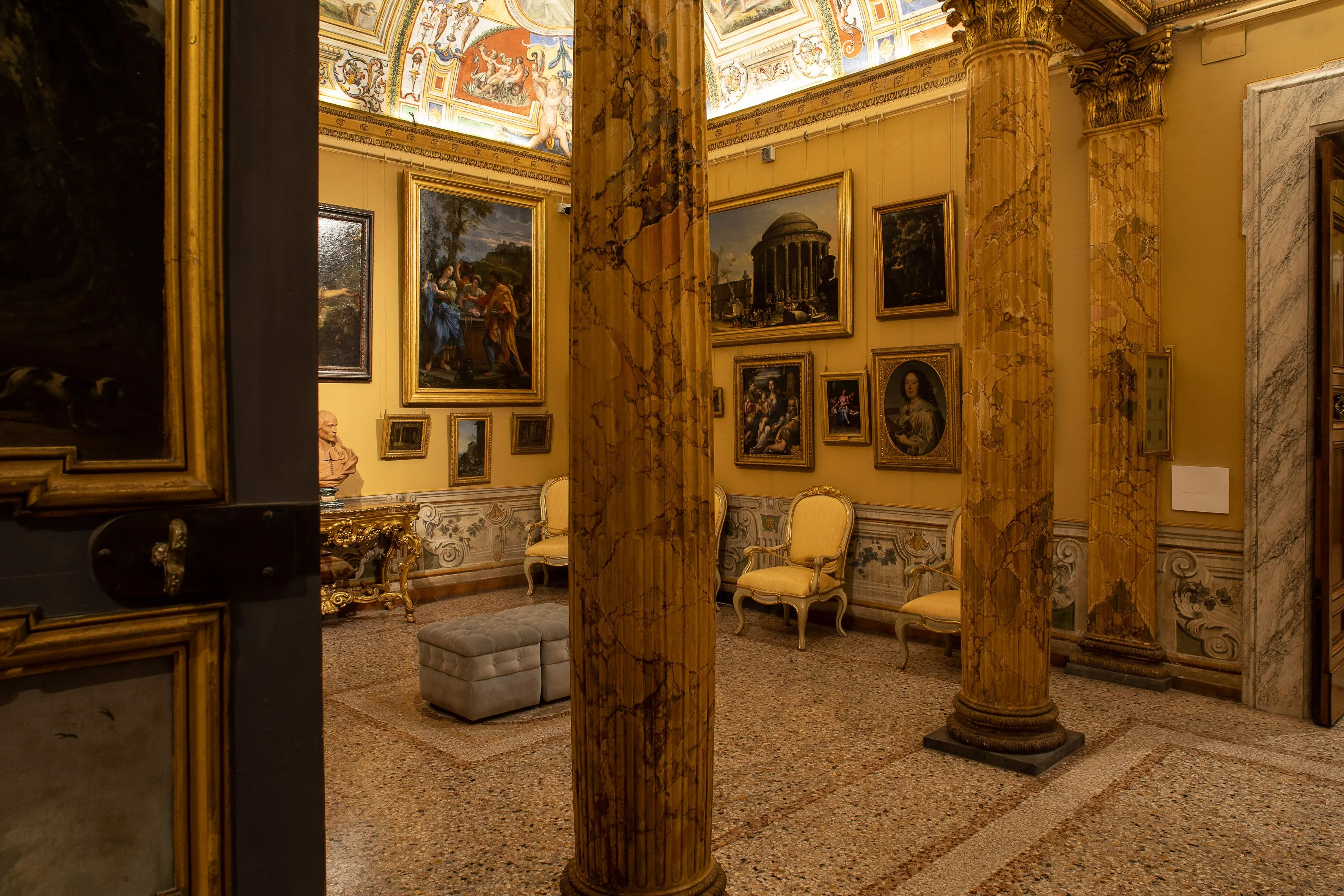
Most visitors think architecture is background and paintings are content. At Barberini, that hierarchy fails. The building does not contain art; it actively edits your encounter with it.
Start with sequence, not style names
Forget labels like early or high Baroque for five minutes. Ask instead:
- What does this corridor prepare me for?
- Where does the space slow me down?
- Which threshold changes my emotional register?
Four architectural moves to notice
- Compression to release: tight passage into broader volume.
- Vertical invitation: stairs as argument for ascent.
- Framed views: doorways creating visual episodes.
- Light staging: windows and reflections guiding attention.
Vocabulary without intimidation
| Term | Simple meaning | What to watch for |
|---|---|---|
| Axis | implied directional line | where your body naturally moves |
| Rhythm | repeated spacing/forms | how columns or openings pace movement |
| Threshold | transition zone | emotional shift at entries |
| Hierarchy | order of importance | where ornament concentrates |
Architecture teaches by moving your body before it informs your mind.
Practical challenge
In one room, sketch only arrows for circulation and circles for pause-points. No artistic skill needed. You will immediately see how the room scripts behavior.
By the end, you will not just remember isolated artworks. You will remember the spatial sentences that connected them.
About the Author

Rome Art Desk
This guide was created to make Palazzo Barberini approachable, meaningful, and easy to enjoy for every kind of traveler—from first-time visitors to passionate art lovers—by combining practical advice with the stories that make this palace unforgettable.
Tags
Comments (0)
Loading comments...